
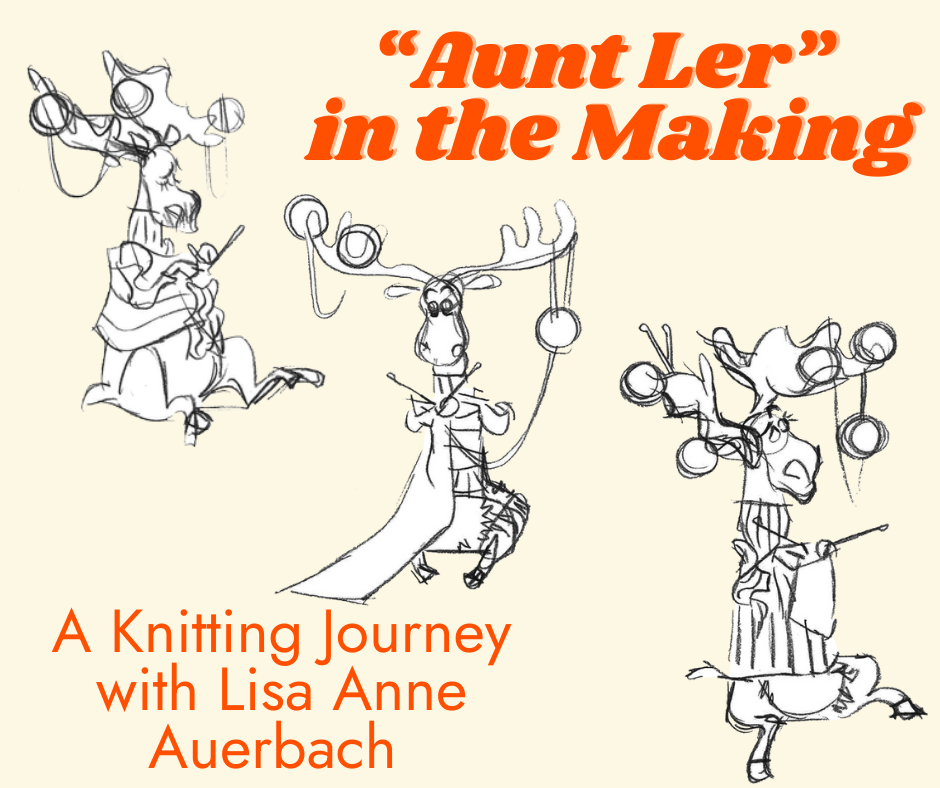
Character concept design by Zane Yarbrough
One of the greatest highlights of making of Choo Choo Revue has been working with incredible artists across disciplines on puppets, music, ideation, and more.
One such incredible artist that we have gotten to work with is Lisa Anne Auerbach, an incredible textile artist.
Lisa created an amazing sweater for one of our newest puppets, “Aunt Ler,” a knitting moose and train passenger in Choo Choo Revue! It was an exciting collaboration throughout Aunt Ler’s process with concept designs by Zane Yarbrough, early sculpts by Tony Candelaria, wood joinery by Diana Carver, and Lisa’s knitting creation, just to name a few of our collaborators!
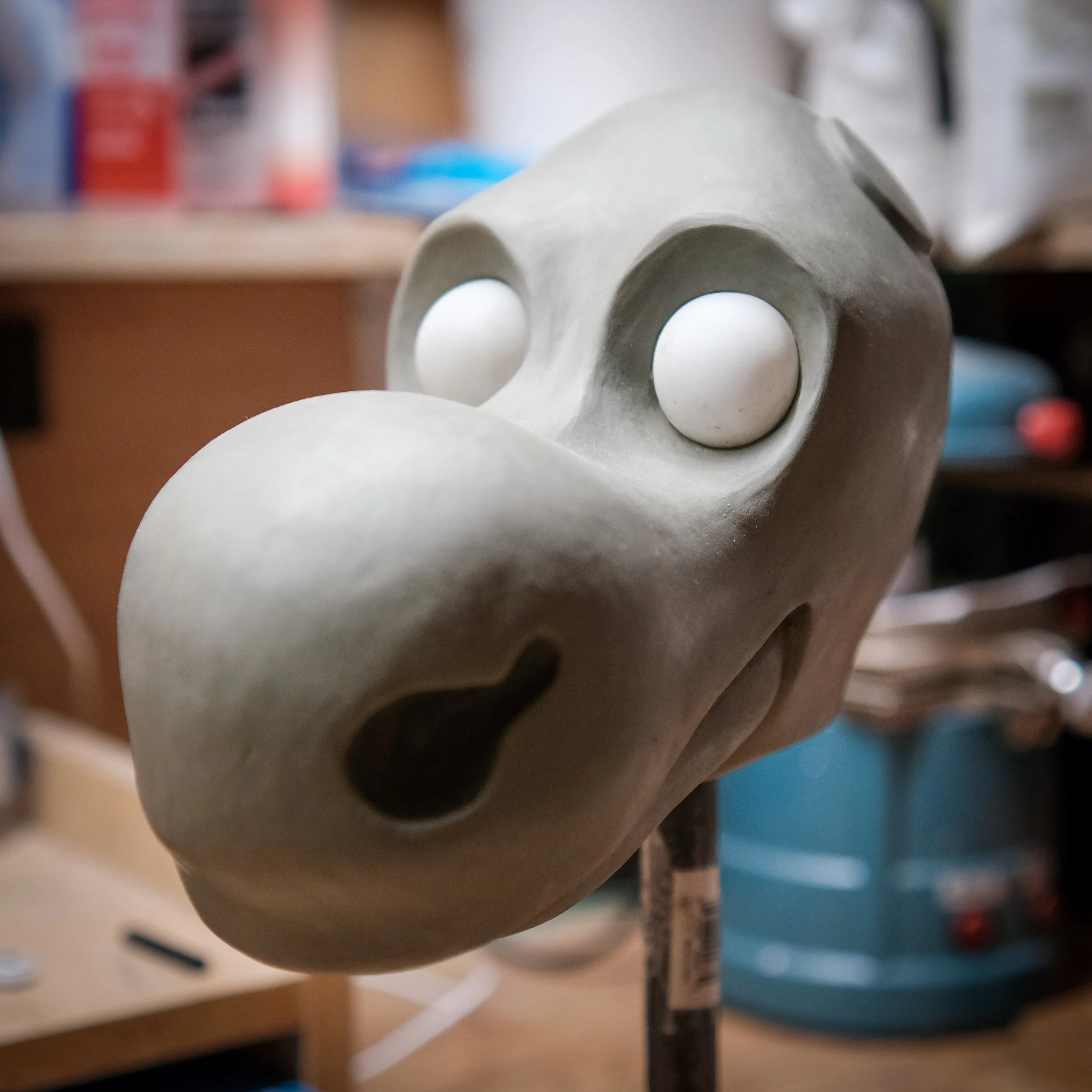
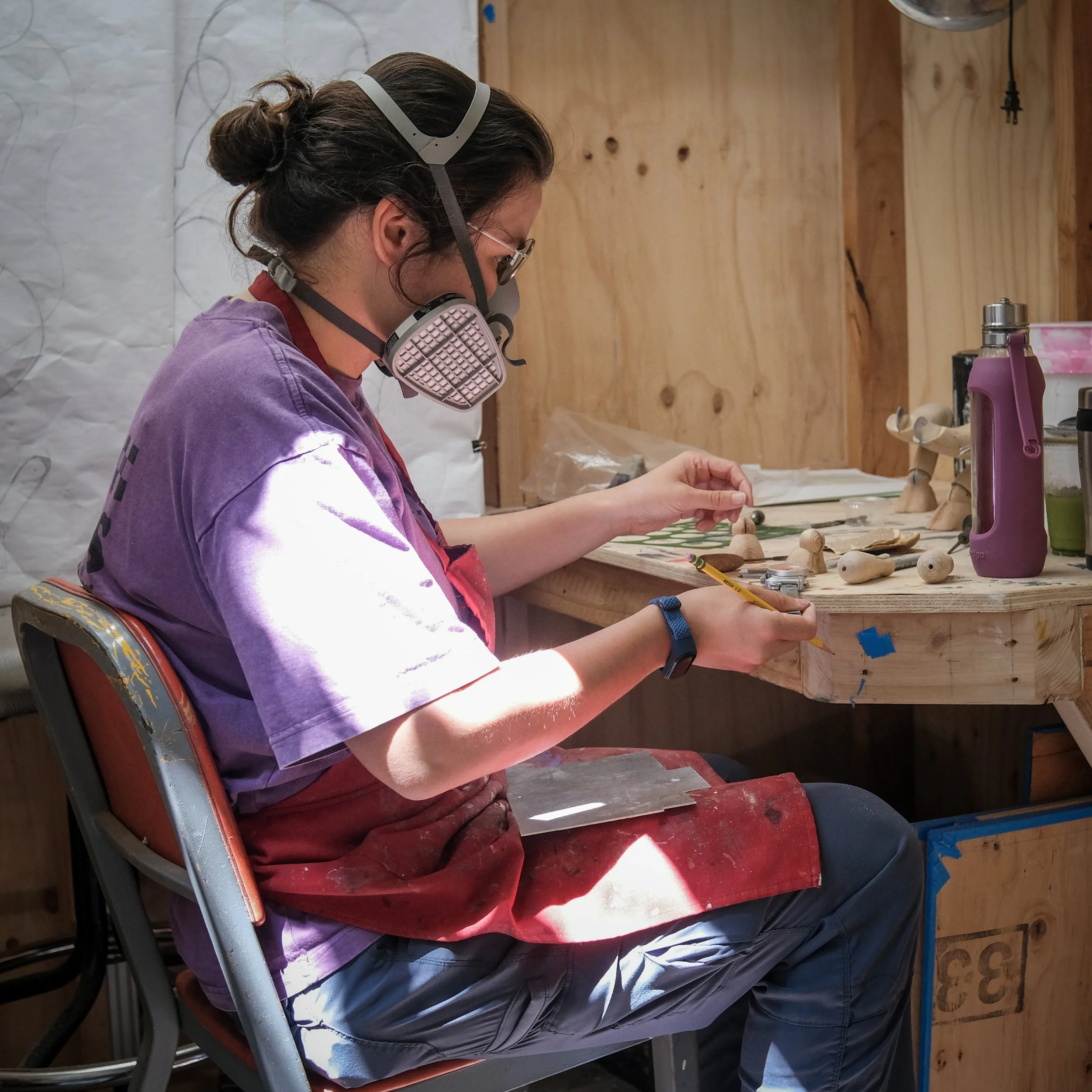
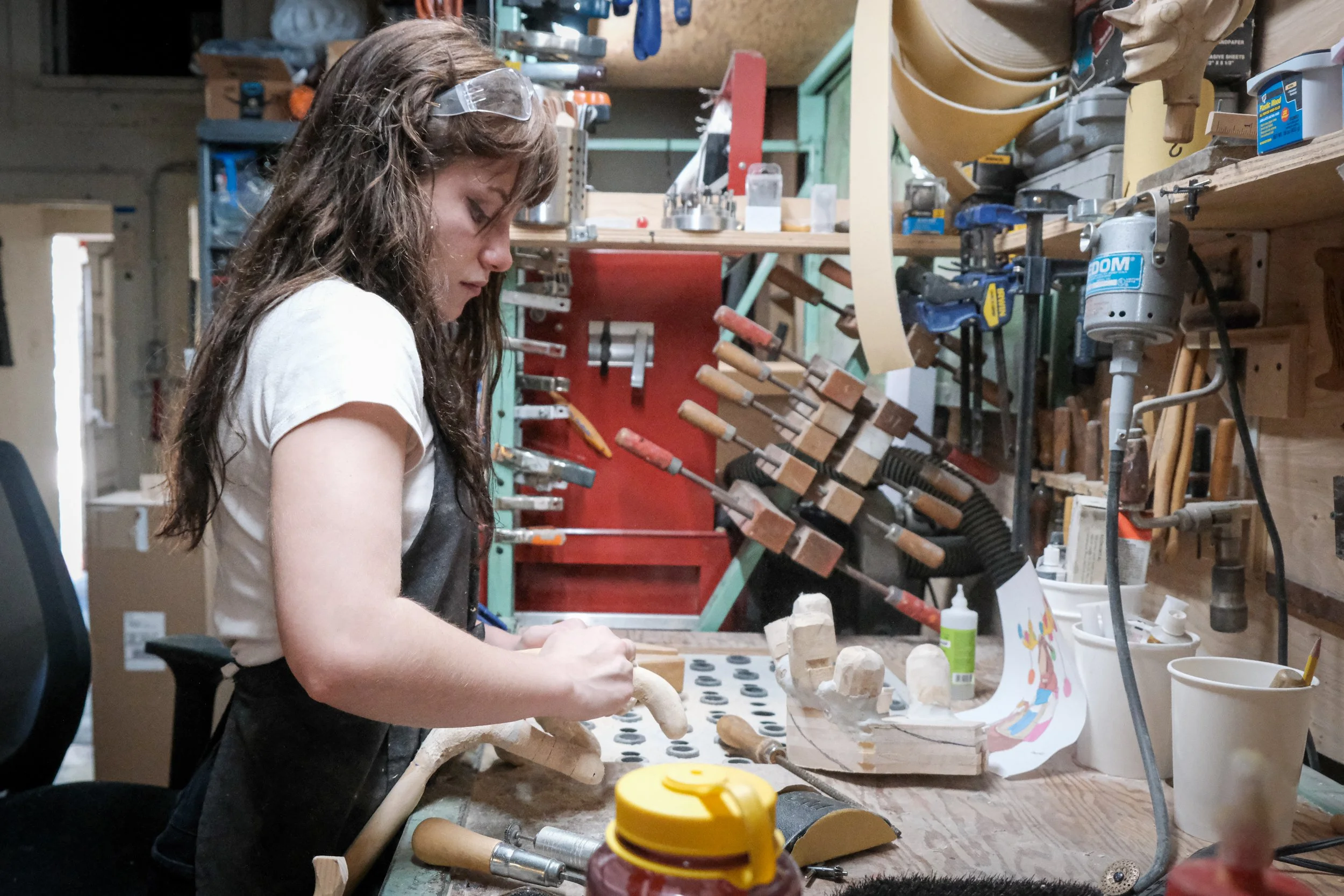
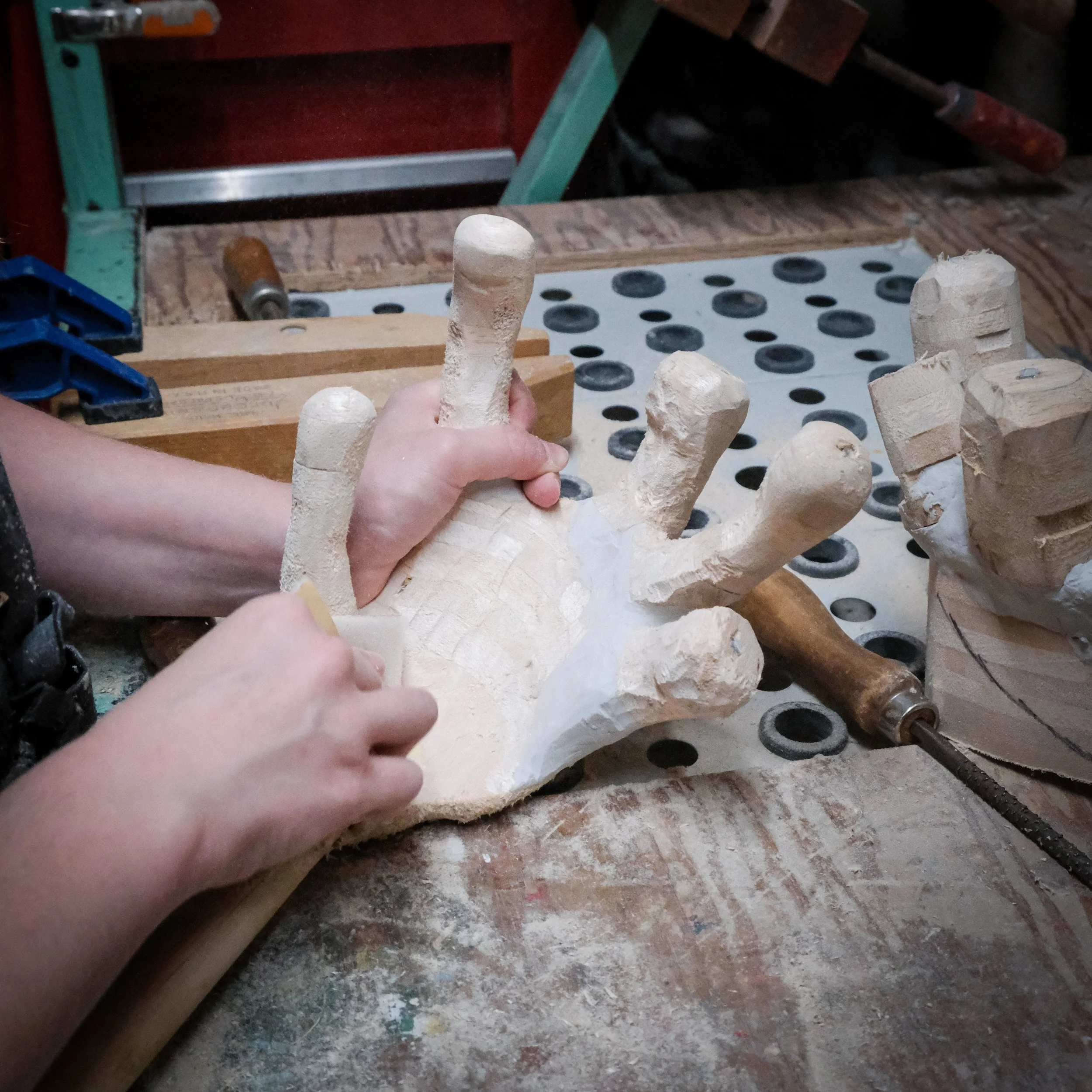
As part of the process, Lisa took her own train ride across the country to inspire her pattern. With the sweater done and fitted to Aunt Ler’s puppet proportions, Lisa is also working on a matching hat to keep Aunt Ler warm throughout the train ride.
While the final yarns are being knitted together, Lisa sat down with us and answered a few questions about her incredible process.


BBMT: Tell us about your train ride! Where did you go? What did you see? How did it inspire your design?
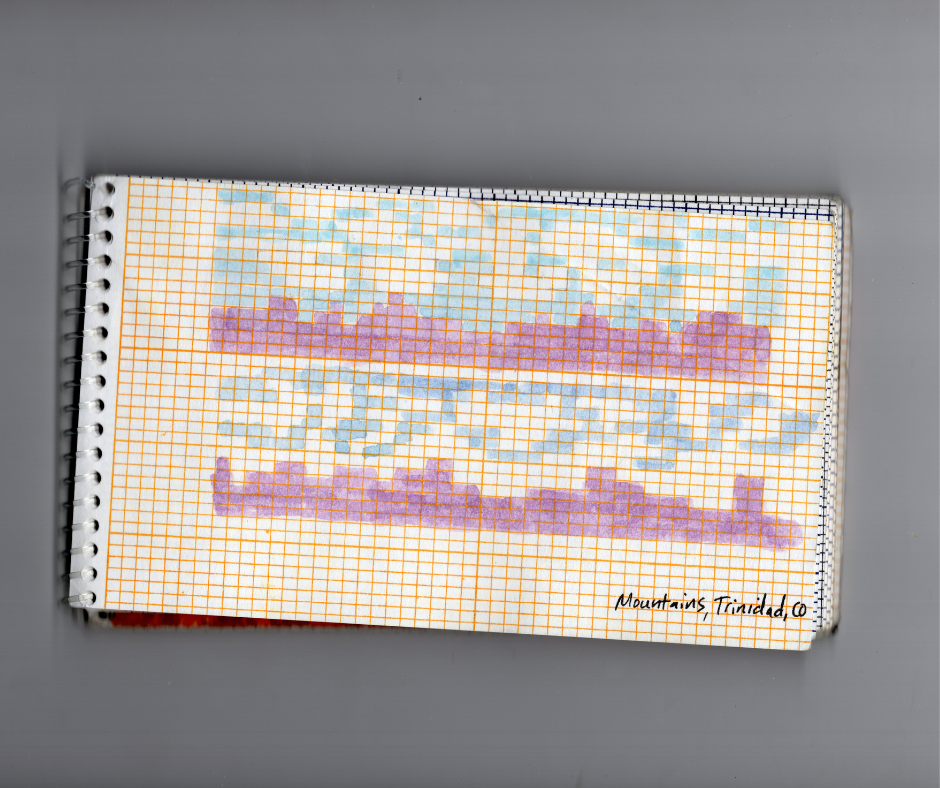
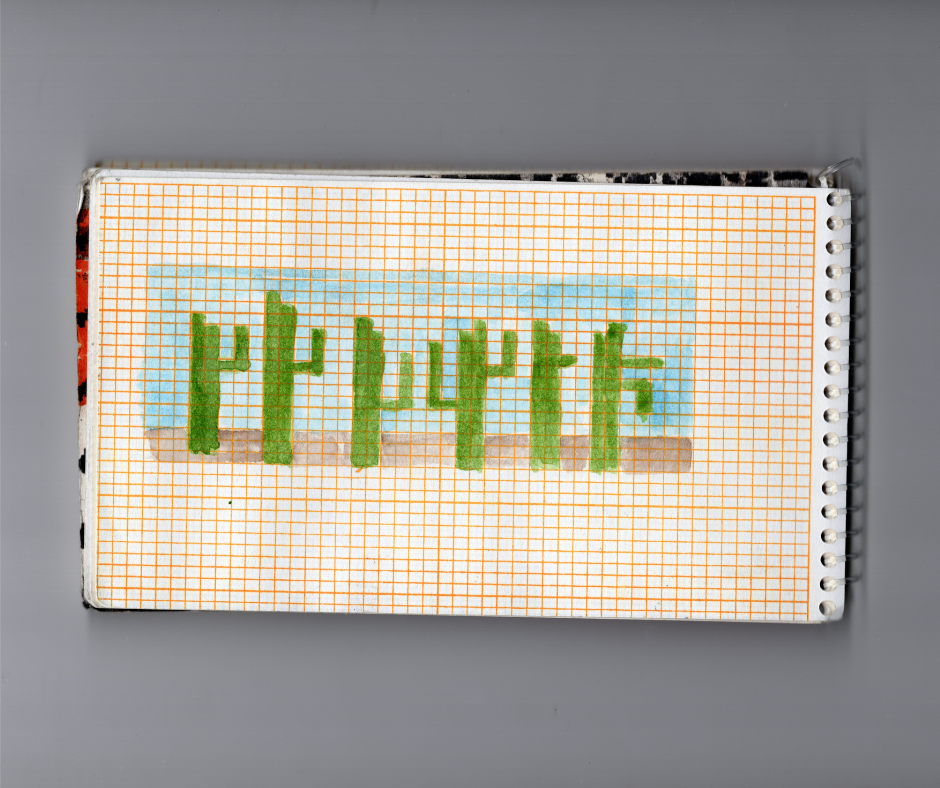
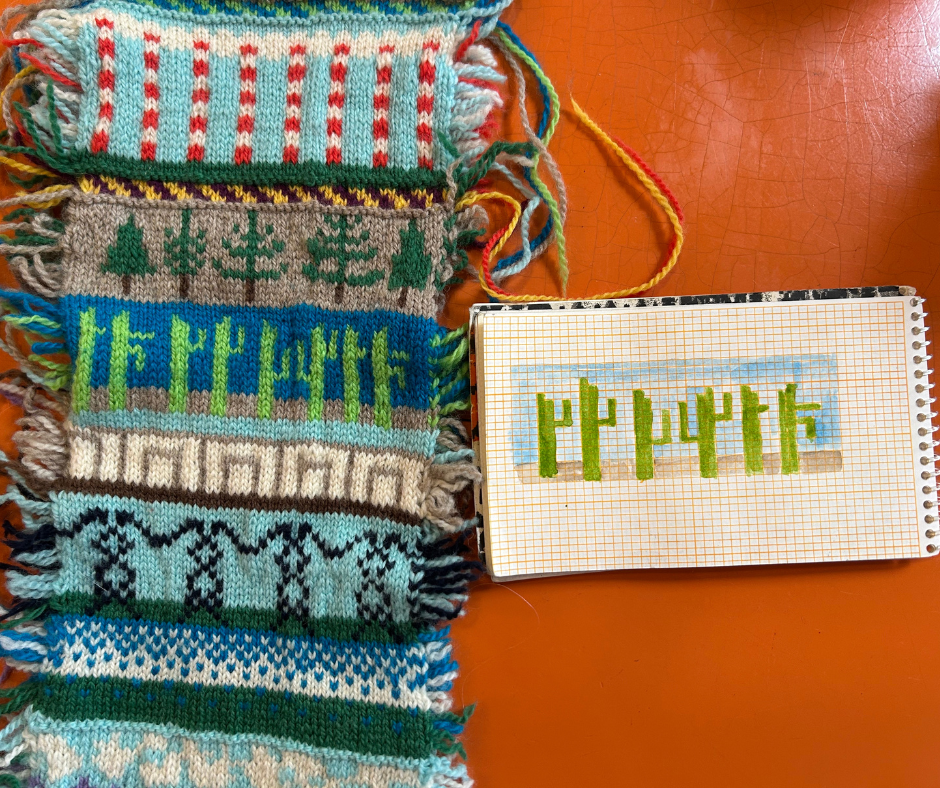
Lisa Anne Auerbach: I took an Amtrak train across the country this summer, from Los Angeles to Pittsburgh, changing trains in Chicago’s Union Station. I saw lots of trees, forests, fields, farms, other trains, sunshine, rain, fog, mountains, deserts, high tension power lines, smokestacks, and lots and lots of warehouses. Scenes from out the window were the inspiration for all of the designs on this sweater. While I was in the observation car or my tiny room, I sketched the views on knitting graph paper, translating them into pixellated motifs that could be knit. I made a sampler of the ones I liked best, and chose designs from that as I was knitting the sweater. The trip was a true adventure, filled all sorts of surprises!
BBMT: Were there other inspirations or considerations that came to play when designing the sweater?
LAA: I have long been interested in the Hønsestrik style of knitting, popular in Scandinavia in the early 1970s, which encouraged experimentation and improvisation to push back against traditional knitting culture. In the spirit of Hønsestrik, I didn’t plan the sweater out. I figured out the number of stitches, increases and decreases, but made decisions about color and pattern as I went along. I wish I’d had the space to put in all of the patterns I made looking out the window, but there wasn’t room for everything! Because Aunt Ler is from the Pacific Northwest, I made sure to put some trees front and center.
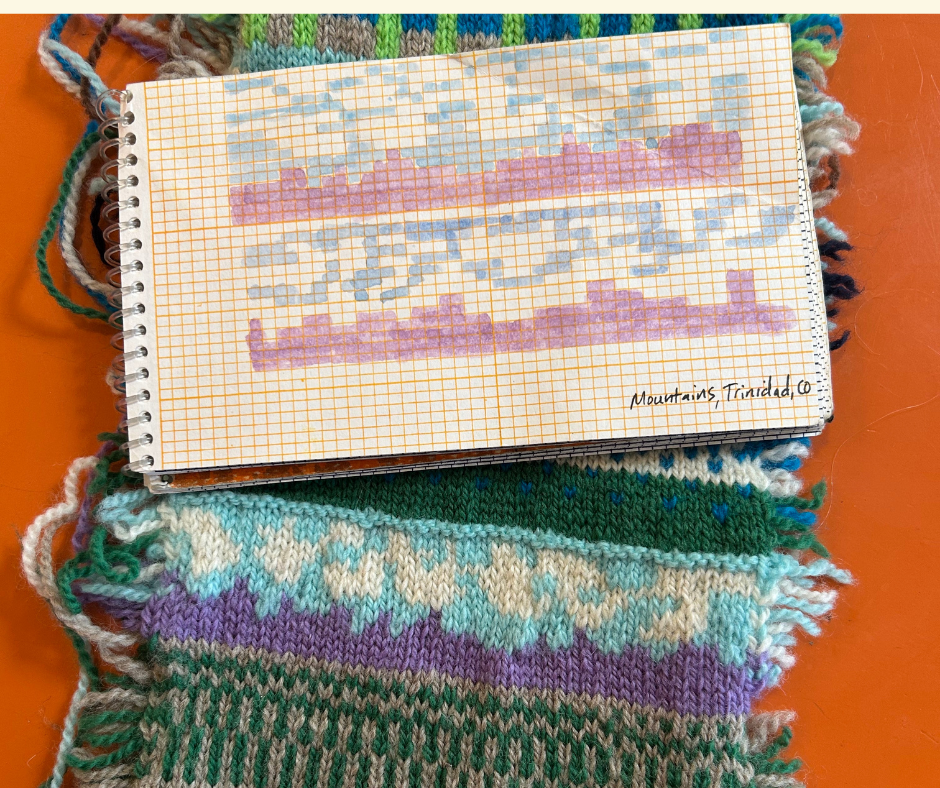
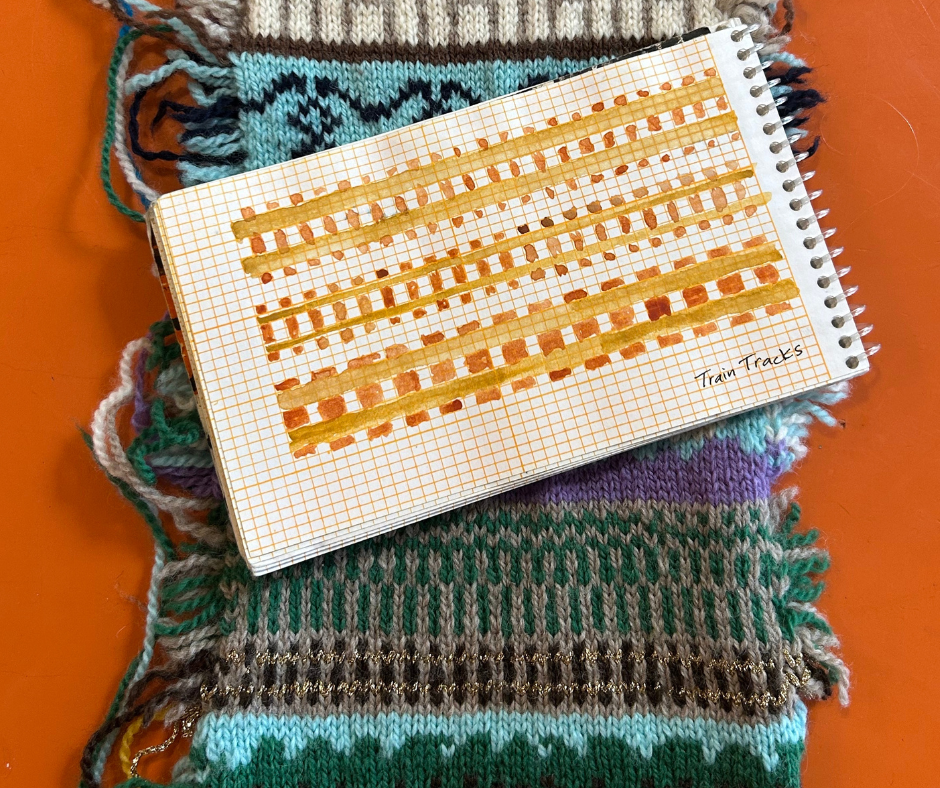
BBMT: Did you need a special approach to creating this puppet sweater for the stage versus a regular knitted garment?
LAA: This is my first time making something to fit a puppet with unique and non-human proportions. Paula, who sews costumes for BBMT, made a fabric template of the sweater which I used to help with proportions as I was knitting. Aunt Ler has generous hips and a nipped waist, so I started knitting at the bottom edge of the sweater and then after a couple inches decreased dramatically. The yoke is longer than would be for a human so I elongated the number of rows between decreases. I used smaller yarn and needles than I might normally use for a sweater, and I knit it in a round with a steek, which I cut later to make the cardigan.
For the buttons, I spent way too much time on eBay, where I discovered conductor uniform buttons that were once manufactured for each railway. Each button on Aunt Ler’s sweater is from a West Coast rail line like Los Angeles Railway, Pacific Electric, and Western Pacific. Details like that are important to me, even if no one in the audience will notice.
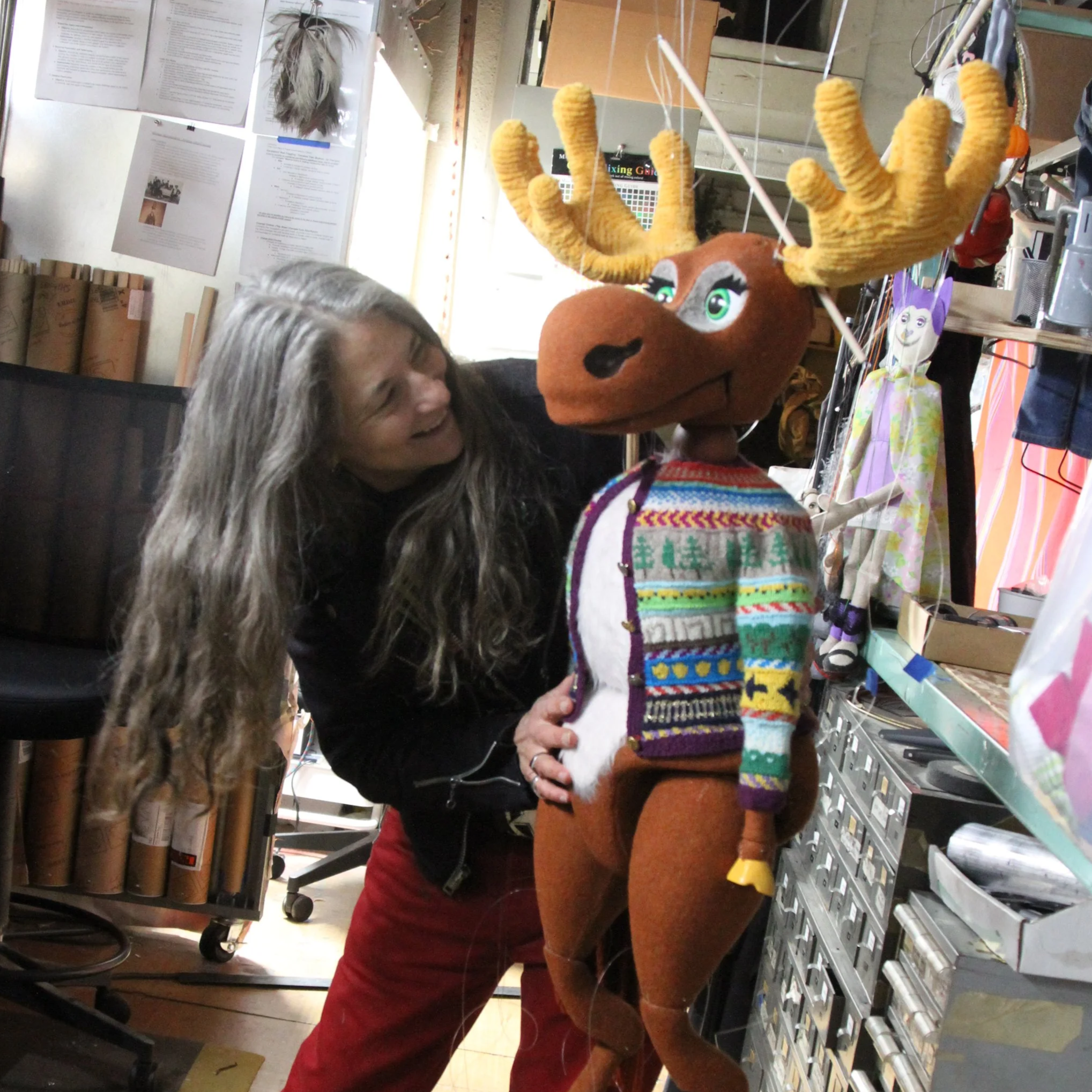
Lisa and Aunt Ler in her new sweater!
“I am super excited that this sweater will have a life at the theater, and will be keeping Aunt Ler cozy for years to come. Perhaps it may even inspire some youngsters to learn to knit and make themselves a Hønsestrik sweater like Ler’s! ”
BBMT: Any changes or adjustments that you made while the puppet itself was being created and brought to life?
LAA: The first piece I knit was the sleeve and the bottom edge of the sweater, and I brought them to the theater for a fitting on Aunt Ler. The bottom edge was the right size, but the edging I choose wasn’t laying flat. The sleeve was a bit too baggy. I reknit the sleeve to be smaller. I think the edge of the bottom could have been blocked to lay flat, but I didn’t want to take any chances, so after the rest of the sweater was knit, I tore that out and reknit in a different stitch pattern.
BBMT: What were you most excited about in working on this project?
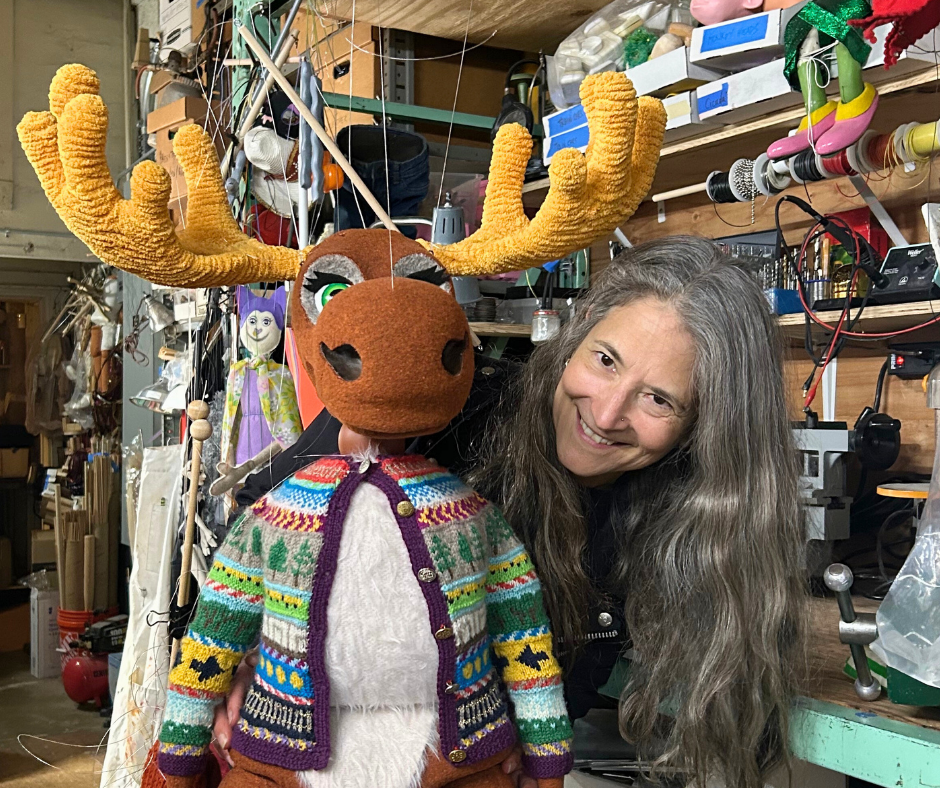
LAA: Bob Baker Marionette Theater is a marvelous and magical place, and it was a huge honor to be invited to create a sweater for a BBMT puppet who shares my love of knitting! I am super excited that this sweater will have a life at the theater, and will be keeping Aunt Ler cozy for years to come. Perhaps it may even inspire some youngsters to learn to knit and make themselves a Hønsestrik sweater like Ler’s!
BBMT: We agree! For those interested in learning more about your work, would you mind telling us a little bit about yourself?
LAA: I grew up in Illinois, where Scandinavian sweaters were essential on snowy days, but I didn’t start knitting until I moved to Los Angeles in the 1990s. I was inspired by the sweaters worn by Cheap Trick’s guitarist Rick Nielsen, and I learned to knit from a library book. My sweaters have been shown in galleries and museums, including the Hammer Museum, Aspen Art Museum, Malmö Konsthall, and the Whitney Museum of American Art. I teach photography, fiber, and self-publishing at Pomona College in Claremont.
Thanks for talking with us, Lisa, and for all the incredible work you do!
Jump on board for Trains of Thought as we send monthly dispatches from BBMT workshop and stage as we create, rehearse, and bring Choo Choo Revue to life.
We’re currently raising funds to help bring Choo Choo Revue to life! Help us complete the last 10 puppets by donating before the end of the year! Donate today!