
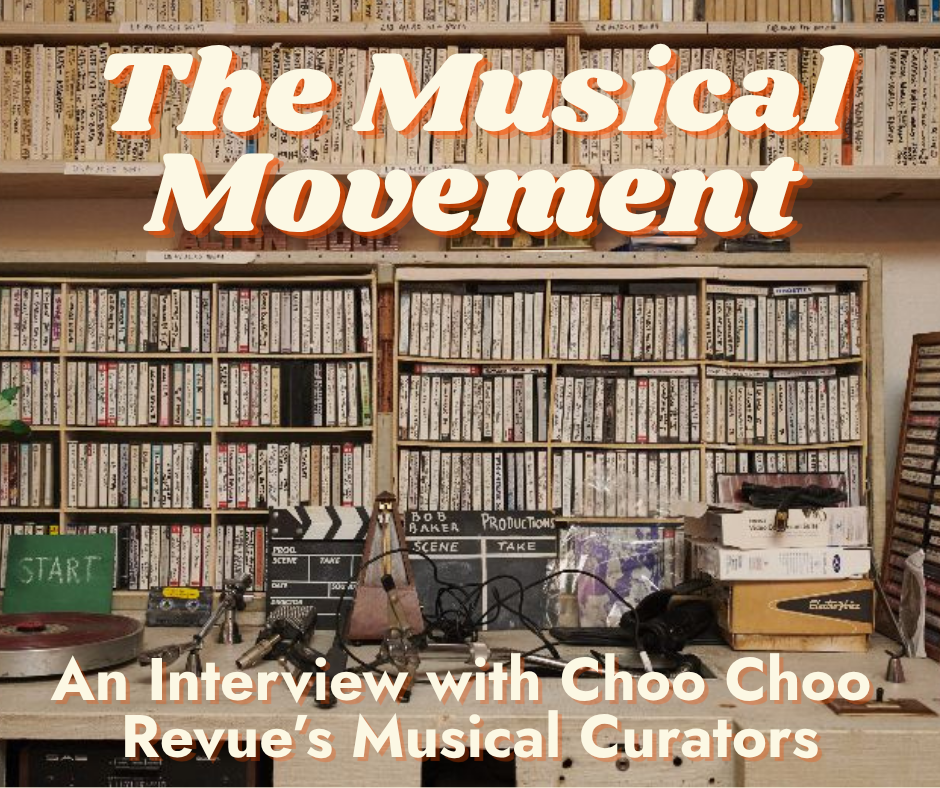
When it comes to creating a new BBMT puppet show, Bob Baker and “music” become instantly synonymous. Whether you realize it or not, music is ever present in our BBMT world; just think of the moment one of our shows comes to mind. You feel the movement of the puppets, the lilting lift of the backdrops, the synergy of the lighting, the energy from the crowd. Without music, the very heart of all of this would be stopped in its tracks only waiting for a cue to begin, begging for a moment to be met with.
To be perfectly clear, our theater is what we like to call a “living theater.” We move every part of it to the rhythm of a story told through sound, whether it’s a lovely lyric, the call of a trumpet, the beat of a drum... and even you’re involved, clapping along and keeping rhythm alive! And that’s just how we like it.
But what happens when the framework for a BBMT show is all new? What kind of music do you use while still keeping the integrity of the legacy show roster we all know and love? Where do you find it? And who has that special ear to carefully select this music when you no longer have Bob Baker and his wild imagination to choose it himself? Luckily, music doesn’t fall too far from the theater organ around here, and we have a couple of musical modern day heroes at the engine to make sure Choo Choo Revue chugs along without a hitch, including using our 5,000 audio archive as a resource for inspiration!
Meet Edward Torres, Ramiz Monsef, and Frank Fairfield.
They have given us a moment of their time to help us answer some of these billowing questions brought to mind and enlighten us with their aural landscape of Choo Choo Revue.
Please note, these responses have been shortened for clarity and brevity.
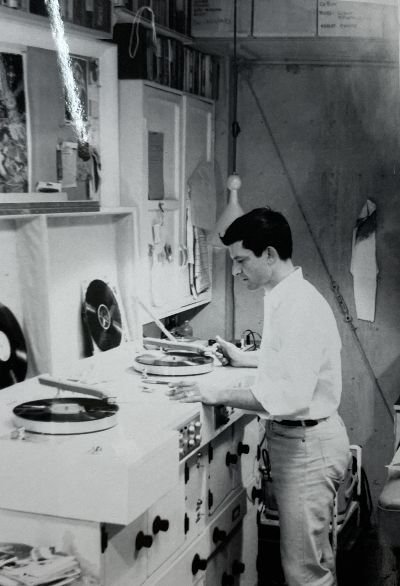
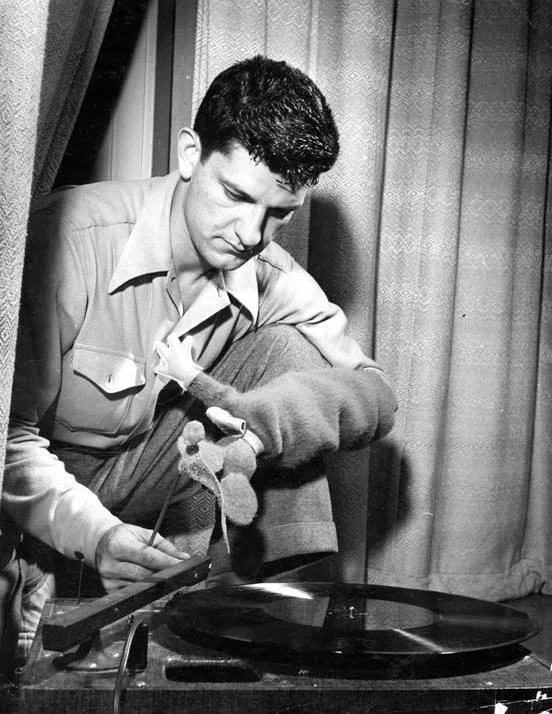
Bob at work, selecting and editing music for puppet shows.
Ginger Duncan for Bob Baker Marionette Theater: Tell us about the beginning steps of your process. Where did you begin when it was time to choose music for a number? What came first, the selection of the music or the storyboard idea? How was this all presented to you?
Frank Fairfield:
We’ve been talking about a new show for years before we knew it was. Eventually, it transformed into a train ride. Alex brought up pieces of music that we felt into the ideas. We got obsessed with train songs, and then Alex and I looked around for fun references. You could start to see sequences start.
At one point, we officially met for music ideas and a few meetings and it whittled itself down to me taking some of these things and putting them into a sequence and trying things out. That’s a lot of it. What I really enjoy about this kind of thing is that it’s not about you, you can’t have an ego. It’s about what will work in the show.
In some cases you’ll have an idea that you are really proud of and think will be great, but then it gets cut. It’s what fits the show. Everyone is looking for what will make a Bob Baker show. It will be informed by our world view, but at the end of the day, it is how we make it a great Bob Baker show, which says let’s disappear into this world of imagination. It’s a tricky balance.
I don’t know where the show will be when it premieres, let alone 10 years from now. Who knows where it will end up after it has enough time to ferment? So far, I think it straddles that line pretty well. I am excited about it.
Edward Torres:
I was approached by one of our fellow colleagues about possibly wanting to assist for this musical expedition, shall we say? I was honored to even be considered. I knew what the vibe was and it was interesting for me to go and try and find music that would fit both the theme of the show and Bob Baker’s style as well. I was also given some feedback from Alex and some other folks during the process to see what we could include that might be a little bit more on the modern side or as a slightly different flavor from what Bob Baker is.
I started doing research on general Bob Baker tunes and finding things of the same flavor because at that point, I had no idea what the show was going to be. I wanted to have an arsenal of general music that I would consider the theme for Bob Baker for shows.
Ramiz Monsef:
It was a really fun exercise because it was challenging the role of the act of music in my brain. Alex had a loose storyboard with an idea of what they were looking for but there weren't a lot of parameters, except that I had to get into obviously the Bob Baker aesthetic and we're looking for not necessarily newer music, mostly older stuff. It was almost like a writing prompt. I threw out as many ideas as I could have come up with and I hoped that one of them would stick, but it wasn't about being right. It was just about flooding the wall with options.
Between my collection and the fun stuff they have at the theater, there are a lot of things to choose from. I spent days pulling things that I probably never would have listened to on my own, but because the challenge was finding something in this room. It was so fun to spend days there pulling things and listening to them.
BBMT: What did you find within your musical background that most supported selecting songs for this show, in particular?
FF:
It’s hard to separate yourself from your interests. Everything shapes everything. The main thing was trying to see the experience of a Bob Baker show, trying to see what fits there. That’s skill. You could know a lot of songs, but that won’t help the show.
It seems like everyone was on board with that. Not just our expertise, but that we get what the show was about. And we can feel what fits, or if it is close. And then there are the things that seem great, but you have to cut for time. The show was furiously long for a while. And you love all of them, and want to do it all. But you have to prune it down to something reasonable.
It comes down to flexibility. You have to submit to the will of the show. As a musician, I like working like that. You serve the repertoire. You don’t master it. You serve the instrument. It has something to teach you.
ET: When I was first brought on to become the organist at Bob Baker, I was asked during my interview what sort of music they would want and what music I intended to play. I said dance band tunes of the ‘20s and ‘30s, a lot of early big band, great American songbook, etc, which was fine for a few weekends. Then Ginger, one of our puppeteers, gave me a wonderful piece of advice of just trying to keep everything light. I have always tried to keep things upbeat and kind of light and frothy.
When looking for music for railroads or different places to visit, I always try to look for songs that were musically arranged that had that same flair, that same bubbly flavor, that is quintessential for a Bob Baker show. There was a lot of my own playing organ with the theater along with my personal musical training and the language I understood of these long forgotten pop tunes that came in great use because I could say “Oh, there's this one song that I know that was popular in 1934 that might fit perfectly for this scene and I can see the marionette singing to this in this particular environment.” This helped out quite a bit for suggestions of what could or could not work with my other fellow colleagues in the project.
RM:
I've grown up with music and musical instruments, cello and saxophone for a tiny amount of time, tried and failed playing guitar, but then really glommed onto the drums and that's moved into like being an MC and producing beats, so obviously I love hip-hop, but I don't think you can really love hip-hop or make beats without loving where the music for those beats comes from. It turns you into a bit of an armchair musicologist, a musical archeologist in a way. You start digging into beats and going, where does the sample come from? Each time you ask yourself that question, that's a door opening up that usually leads to a word you never would have known about having not been looking into how a certain beat was formed.
I'm also a playwright and the first play I ever produced was a musical and a lot of the research for that was finding old blues records and listening to those. So that's where my vinyl collection started.. Now it has also turned into this radio show that I call ‘The Old Head Radio Hour’. That became my excuse for having such a big collection and I was like, “I gotta have to play this for people. I can't just let this sit on my shelf if I'm not playing these records, what’s the point of having them”. So I started doing that show and Alex listened to it with my co-host Hugo and he brought me into the Bob Baker loop because of “Old Head.” It's such a fun confluence of connections.
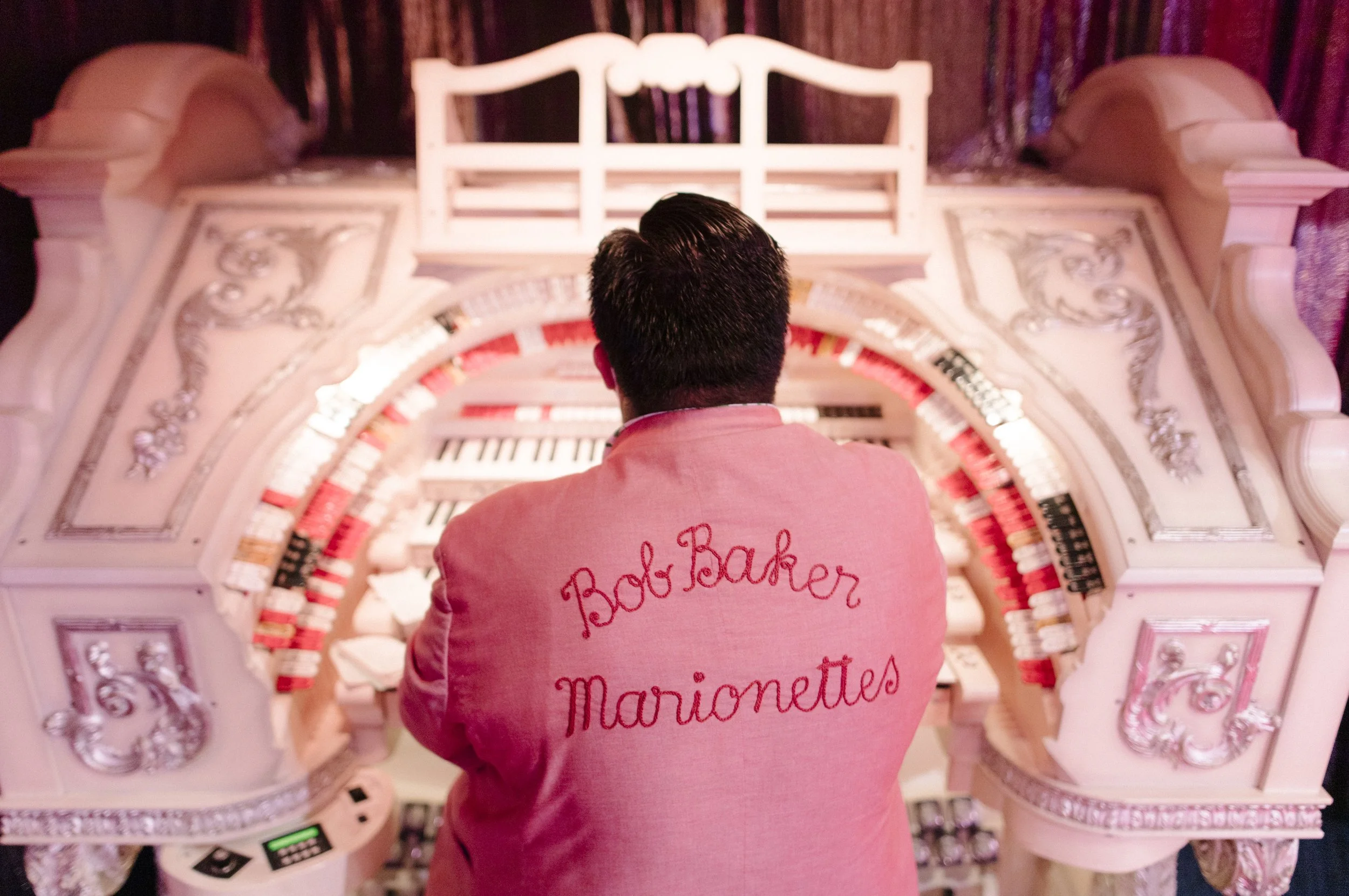
Edward Torres Plays BBMT’s organ
BBMT: How much research had to go into the soundtrack for this show? Were there songs you instantly knew had to be a part of it, and were there some surprising new favorite gems you discovered along the way?
FF:
One thing that was fun was going through Music production libraries, KXPM and things for interstitial things, and bridges. All of that is being finished, but that was really interesting. The fun was all the possibilities, and then Ed or Ramiz coming up with wacky songs. Listening to it all, you get excited about possibilities. And then the reality of trying to cut it down into a show, that’s the part that is Alex’s turf. And you just have to let him cook.
ET:
It was a combination of everything. I already had an extensive catalog beforehand with my own musical tastes as well as the music that I like to play. There were things that I specifically researched for like railroad related music, listening for something that musically that sounded like chugging or movement. Movement in music was what I was going for, then a foreshadowing to movement throughout the incidental music. An important part of the Bob Baker show is there is always a sense of moving forward. If myself or my collaborators chose something that had that same flair, it would be perfect segue music into what felt like “chugging along the tracks.” There's always movement going forward in the music. Whether or not the actual recorded tune had anything to do with trains was besides the point, it was that very specific flavor of music.
RM:
I had ideas, but I found through collaboration with Alex, Frank and Ed, was not being precious about any suggestions. Just throwing as much as I could think of. A lot of the first things I sent out were very graciously and gently rejected, but it wasn't ever personal, it was more like we're trying to get closer to the target of what this thing needs to be.
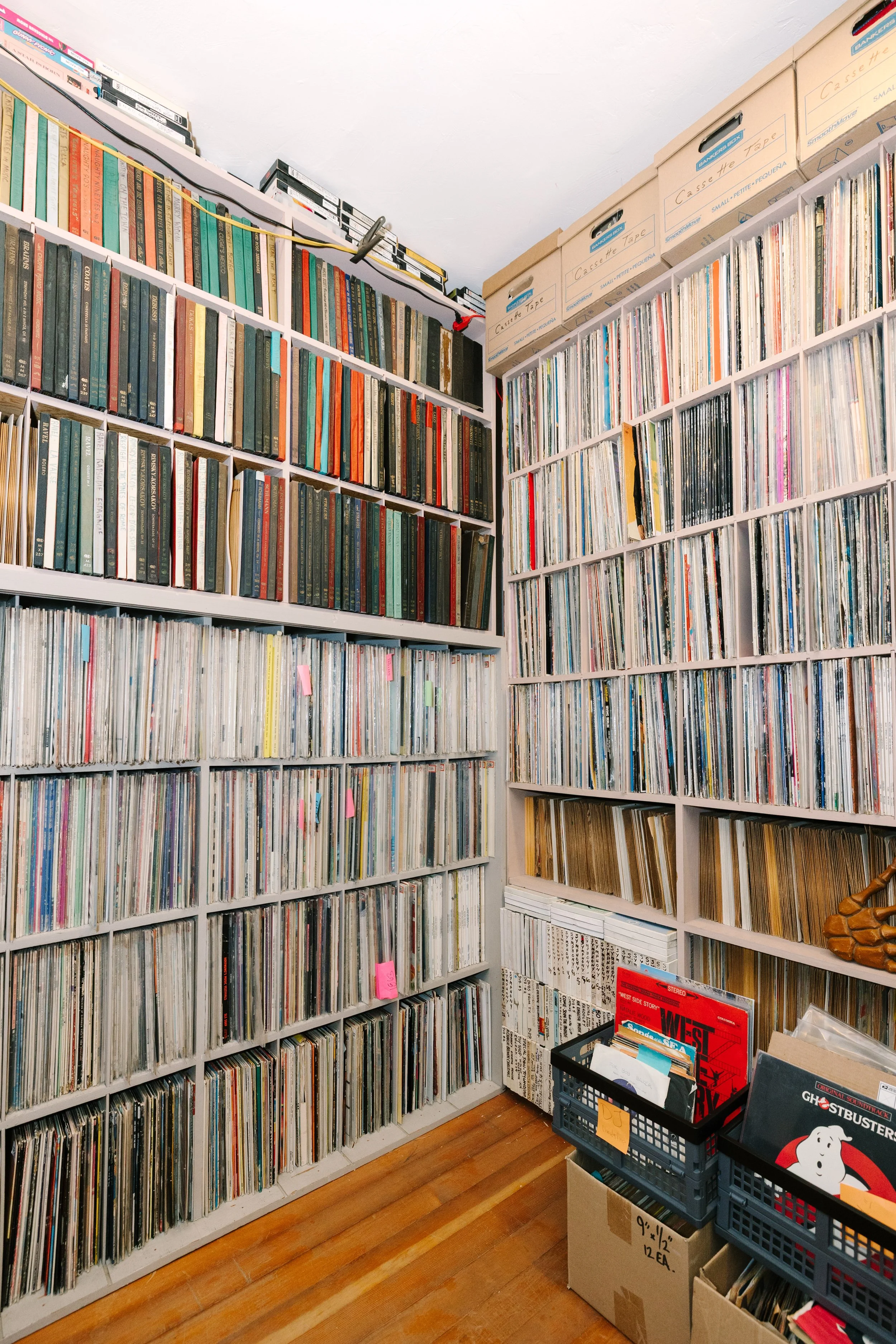
BBMT’s audio archive includes 5,000 records, reel-to-reels, cassettes, and more
The thing I found personally as a little musical gem is that the song for Sasquatch is now “Mr. Cellophane.,” which I think was my suggestion.Originally, I was thinking about who would be the best person to be the voice of Sasquatch. And I was like, “Oh my God, Walter Mathau.” Then it sparks the thought of, “Okay, has Walter Matthau ever recorded any music at all?”
Turns out, he has. There's a 45 record with Matthau doing the vocals. It's awesome. It didn't end up being the thing that we used, but I took that away. I don't think I ever would have found that, had I not been involved in trying to pick a song for Sasquatch for this show.
BBMT: What format did you use for sourcing and researching your music selections? Did you have a preference for any of these, and why?
FF:
Music production libraries, and YouTube. YouTube is so useful, and you can really dig around. Also other people’s records collections and the Bob Baker library. My own record collection didn’t have things that really fit into the show, but applying that hungry digging, scrapping, looking, looking for things that would work. In making the show, it was fun to consider what Bob would consider on some of these numbers.
ET:
I spend a lot of time at home both using obscure weird records that I have in my own LP collection of children's records or organ records or vocals, and again, the dance band music of the 20s, 30s and 40s and other obscure pop stuff. I used anything that I could. I listened to cassettes, LPs, a few CDs that I have where I came up with a few weird ideas and YouTube. A whole lot of different stuff. One of the most beautiful things about trying to make a show now versus back then is that we have things like YouTube and Spotify literally at our fingertips. When you think about when Bob was trying to do this, he had to go to a record store and buy a record if he didn’t already have one for something specific. Using the tools that we have at our disposal in the ‘modern era’, as the kids say these days, was a wonderful help.
And it was great to delve in and even if I didn't find something that necessarily works for the show, I found a song that’s a really catchy tune that would be good to incorporate for organ playing for the general Bob Baker stuff.
RM:
It was just volume. Alex gave us a scene breakdown. I think we had a couple images of some of the puppets.There was a visual timeline storyboard we were working off of. And then for each one, just come up with as much stuff as you can. I think at a certain point, we divided up who's looking for what. But really there was no ego involved that I ever sensed, there were just people being like, “What about this? Nope, what about this?” Everyone threw as much against the wall as they possibly could. Because I think people like myself and Frank and Ed, we like the findings. The solution is always not even as fun as the process of finding it. You just throw, looking through everything, seeing what works, seeing what doesn't.
And we were like a Voltron team too, because Frank has his collection of all these old 78s from way back. He's got some wild, early musical stuff. And my stuff is a little bit more modern, recorded in the last like 60 years. But with our forces combined, we had a really wide sort of swath of stuff to choose from, which is fun. And it's a really good lineup, a well-spread team interest.
Bob and puppet playing music
“I just really love the sense of collaboration... I don’t think Bob would have figured this long after his own death, that this whole new group of people are still keeping his name alive. Who knows where it is going from here.”
BBMT: Do you have a puppeteer or dance background, and what about these songs or this process helped support your choices in how they translate into making the theater come to life? In other words, how did you know these songs would offer the right moments for the overall movement of the puppets, backdrops and lighting?
FF:
You are trying to get yourself into that, and to see it. But the music is the movement. It's the impetus for everything happening so it needs to propel it forward. And in realistic terms, that’s where I felt I had something to give to this. I know our rigging, and our spacing. I’ve worked in the Bob Baker back of house, and can ask, “How is that going to actually happen?” It’s also about fitting the certain things that are in a Bob Baker show. There’s the showpiece, the flashy number, like the sneezing skater, the unicycle in the Dia de los Muertos scene, or tightrope walker.
There’s the emotional number. The skunks singing, “If I Were You.” I cry everytime. The mountain lion’s song. It’s that tender moment. There’s a lot more. We are looking for certain things, and it speaks to all these different sides. It can’t be too much of one thing. It has to have a movement.
ET:
Absolutely. For one thing, I was trying to be careful choosing music where the vocalist had a very high pitched voice. For a Bob Baker show, typically everything is pitched up. So if we used that, then the voice would be pitched too high. I want to be able to understand what is being said. I want it to be a cute little tune, but I want to be able to clearly identify what the words and lyrics are about, because that's storytelling. And for musical numbers back then, you would have a vocal for a little bit and then the orchestra would typically take over, then back to vocal. That was something I also searched for that could be helpful from the puppeteers point of view. It’s storytelling but also musically framing how a Bob Baker show takes place with a moment for the puppets to gather, be immersive with the audience and then continue their performance. There were other songs that didn't have any vocals at all, but maybe would be a good all around instrumental version with a lot of energy that would portray whatever is happening on stage, as well. And so, I would look at it that way and see what I could possibly find for that.
RM:
Yeah, definitely. Just taking each of those prompts, putting it in your head and going and trying to see or feel the kind of theatricality of a song, does this song tell a story? Which is, I think, why we settled on stuff like Mr. Cellophane. That's a straight up a song from a musical, which is exactly what the song is doing, telling a story. But not everything is from a musical, and I also like stuff that isn’t. But just like listening to a song and asking yourself, does this seem to move these characters along and move this, or that, part of it. Tell the story of whatever scene it's being pitched for. So yeah, always try to think in terms of that, for this kind of approach.
BBMT: What is your favorite part about this show so far, and how does it feel to now be a part of BBMT history???
FF:
My favorite thing is something that was cut, but I hope that someday it comes back. It was when you were passing through radio station towers and I had an idea that it was the same song but all these different songs. It’s even fun to work on something and enjoy it, even if it’s not in the end piece
It’s so beautiful to be a part of this place. I am not as involved as I once was, but I never want to not be in service if I can in some way. I am so proud of the people that are keeping it going, and where it is now. It’s gone above and beyond the hope that we can find somewhere to do a few little puppet shows, but now it is really moving.
I just really love the sense of collaboration. I don’t want to impose my view or myself, but whatever I can do, I am here. If there is something I can help with, I will always try to do it! I don’t think Bob would have figured this long after his own death, that this whole new group of people are still keeping his name alive. Who knows where it is going from here.
ET:
My favorite part literally was just being asked to be involved and seeing it go from pencil sketches to a full production. I remember Alex sitting me down in the workshop one day saying “Hey, Ed, do you want to see what I have so far?” To see his visuals and what he was thinking and then saying, okay this works for something that Frank and I talked about or Ramiz. This scene here would be perfect with something that Ramiz had mentioned in one of the earlier meetings, and so on.
Or sometimes, we saw something else that was completely different. For example, some musical selections we chose won't work for this number or puppet at all, then and back to the drawing board we go. It was great getting to know Alex a little more and the guys a little better, who I've never met before this. It's a real sense of community, especially with music. I think with musicians and folks in the music industry, just to be able to sit in the same room and speak the same language and ping-pong different ideas off of each other. That was my favorite part of the whole process.
RM:
It's hard to say because I've only seen the storyboard breakdowns, so I don't quite know. I don't think I can accurately say what my favorite part is yet, because it has yet to be born.
When I actually do get to see the whole thing, I just want to let the whole thing wash over me and experience it all. I don't know if I can accurately pick a favorite part, but as far as being a part of the history of that place, it’s worth its weight in gold. I just think that place is so cool. And now I'm getting to come there and dig through the archives. I'm a theater kid through and through, and there's something really special there. I love sitting in the audience and by the spotlight booth. It's like being in the kitchen while the thing's being cooked. And to be able to be in a kitchen like the Bob Baker Marionette Theater, it just felt like such a privilege. It’s like a little world that a lot of people get to see, but not a lot of people get to step behind the curtain for. And it's not always a fun thing to look behind the curtain. Sometimes what you see back there is like, "Ew, I wish I didn't see, now that's off because I know how it was made." But this one, it was just as delightful as I hoped it would be. It was a really special thing to get to be a part of. I feel really lucky.
A very special thanks to our expert music curators and their magical musical skills. From the roars of the crowds to the blow of a train whistle, music surrounds us every day and if it weren’t for the people who make the noise, we’d be left without much to go on. Here’s to the music and a whole new soundtrack chugging your way, soon!
About Frank Fairfield
Frank Fairfield is a multi-instrumentalist, music teacher, and record collector. He spent many years performing Anglo-American vernacular music around the country and the world performing at such notable venues as the Royal Albert Hall and the Kennedy Center, playing at festivals including Hardly Strictly Bluegrass and the Newport Folk Festival, appearing on NPR’s Tiny Desk concerts, and providing music for film and television including the animated miniseries Over the Garden Wall. He now focuses on teaching vernacular music and studying 17th- and 18th-century violin repertoire and performance practice. Frank lives and teaches in Los Angeles, California.
About Ramiz Monsef
Ramiz is an actor, playwright, and armchair musicologist, who spends his free time obsessively collecting obscure records from around the world. You can hear many of the records in his collection Sunday nights from 7-9pm on The OldHead Two Hour Radio Hour on Blast Radio! www.blastradio.com/oldhead
About Edward Torres
Theatre organist Edward Torres, fell in love with popular music of the 1920s and 1930s by the age of 13. As a young teenager, legendary theater organist Bill Field took him under his wing and showed him the ways of the Mighty Wurlitzer. He has been heard in El Segundo's Old Town Music Hall and is currently the house organist at The Bob Baker Marionette Theater. When not playing the Mighty Wurlitzer theater organ, he works as a piano teacher for the Los Angeles County Parks and Recreation Department.
Jump on board for Trains of Thought as we send regular dispatches from BBMT workshop and stage as we create, rehearse, and bring Choo Choo Revue to life.